The botanical world is always evolving.
For generations, people around the world have explored plants and their naturally occurring compounds. Today, new extraction techniques, modern product formats, and a growing curiosity about plant chemistry are bringing greater attention to botanicals that many consumers are only beginning to discover.
One of those plants is Cat’s Claw.
Also known by its scientific name, Uncaria tomentosa, Cat’s Claw is a woody climbing vine native to tropical regions of Central and South America. The plant has a long history of traditional use and has become the subject of continued scientific interest because of its complex natural chemistry.
It is also the botanical at the center of Homiez Botanicals, our plant-powered line built for people ready to explore a different lane of botanical innovation.
So, what exactly is Cat’s Claw? And why is this plant gaining attention in the modern botanical space?
Let’s get into it.
What Is Cat’s Claw?
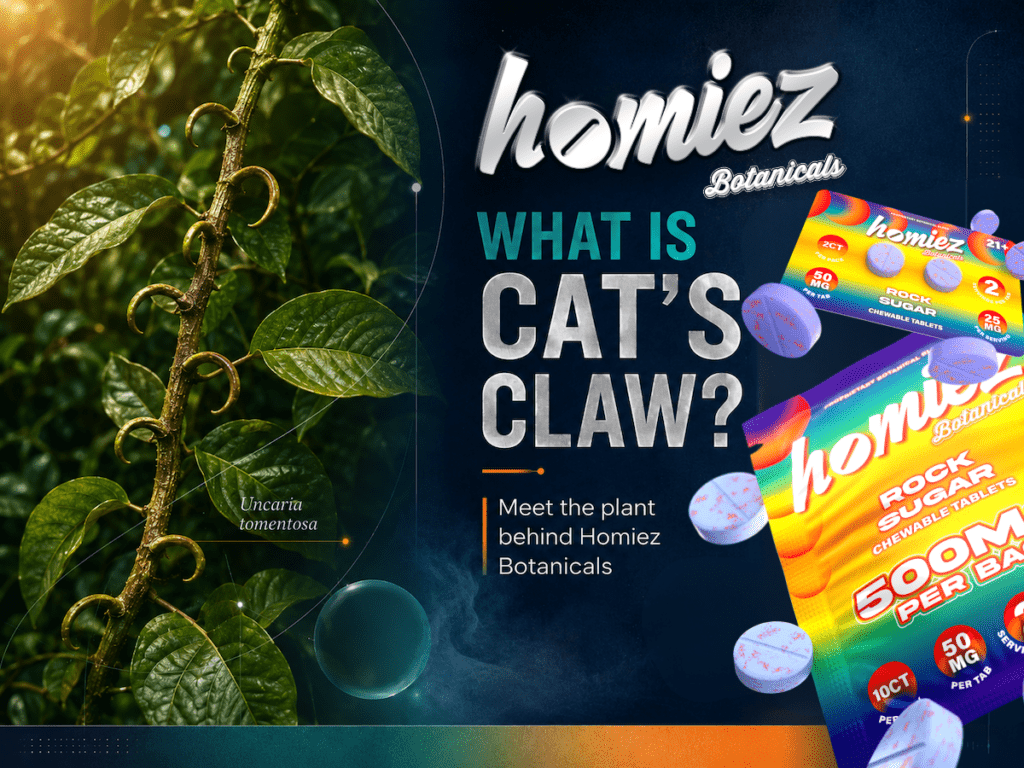
Cat’s Claw is the common name for Uncaria tomentosa, a climbing vine associated with the tropical forests of Central and South America.
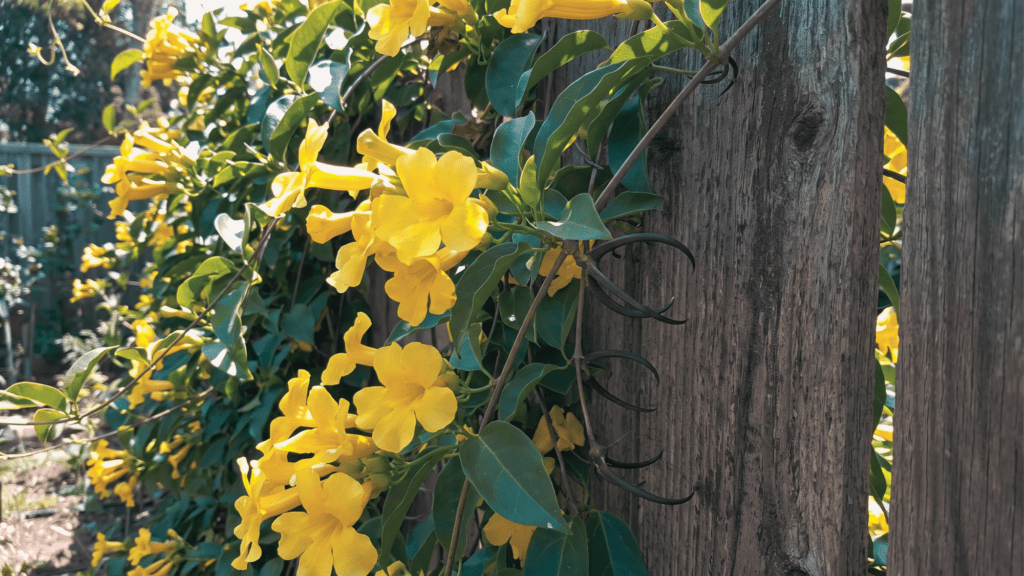
The name comes from one of the plant’s most recognizable features: curved, hook-like thorns that resemble a cat’s claws. These hooks help the vine climb surrounding vegetation as it grows.
While Cat’s Claw may feel new to many modern botanical consumers, the plant itself is anything but new. Uncaria tomentosa has an established history of traditional use in South America and has been studied for its phytochemistry, ethnobotanical history, and naturally occurring compounds. Scientific reviews of the plant describe a chemically diverse profile that includes multiple classes of compounds, including alkaloids, polyphenols, and other plant constituents.
That complex chemistry is one reason Cat’s Claw continues to attract interest from researchers and botanical consumers alike.
Why Is It Called Cat’s Claw?
This one is surprisingly literal.
Cat’s Claw gets its name from the small, curved thorns found along the vine. Their hooked shape resembles the claws of a cat and allows the plant to attach to nearby vegetation as it climbs.
In Spanish, the plant is commonly known as uña de gato, which also translates to “cat’s claw.”
Beyond giving the plant a memorable name, those distinctive hooks are part of what makes Uncaria tomentosa visually recognizable in its natural environment. Published botanical descriptions characterize it as a woody tropical vine with distinctive curved thorns.
But for modern botanical products, the real story goes deeper than the plant’s appearance.
It starts with chemistry.
What Are Cat’s Claw Alkaloids?
Plants are chemically complex. They can naturally contain many different types of compounds, and one group you will hear about frequently in the botanical world is alkaloids.
In simple terms, alkaloids are a broad category of naturally occurring compounds found throughout the plant kingdom. Different plants contain different alkaloids, and those compounds can vary considerably in their chemical structures and properties.
Cat’s Claw is known for a diverse phytochemical profile that includes several types of alkaloids. Research literature on Uncaria tomentosa has described both pentacyclic and tetracyclic oxindole alkaloids, along with other compounds found within the plant.
The important takeaway is not that every Cat’s Claw product is chemically identical. In fact, plant composition and finished extracts can vary depending on factors including the botanical material and extraction process.
The takeaway is this:
Cat’s Claw is a chemically complex plant, and there is much more to explore than its name alone.
A Traditional Botanical Meets a Modern Category
For much of human history, botanical products were experienced in relatively simple forms: whole plants, teas, powders, tinctures, and traditional preparations.
Modern botanical products have changed that landscape.
Today, consumers increasingly look for products that offer:
- Convenient formats
- Clearly labeled serving information
- Consistency from one use to the next
- Transparent product information
- Accessible testing documentation
- An experience designed for modern lifestyles
That shift creates room for a different kind of botanical category.
The plant may have deep roots, but the way consumers discover and experience botanicals continues to evolve.
That intersection between established botanical knowledge and modern product development is where Homiez Botanicals enters the conversation.
Meet Homiez Botanicals
Homiez Botanicals is a plant-powered product line created around curiosity, innovation, potency, and quality.
Our approach is simple: we believe the botanical industry should continue moving forward.
That means exploring new categories, developing modern product formats, and giving consumers a better way to understand what they are buying.
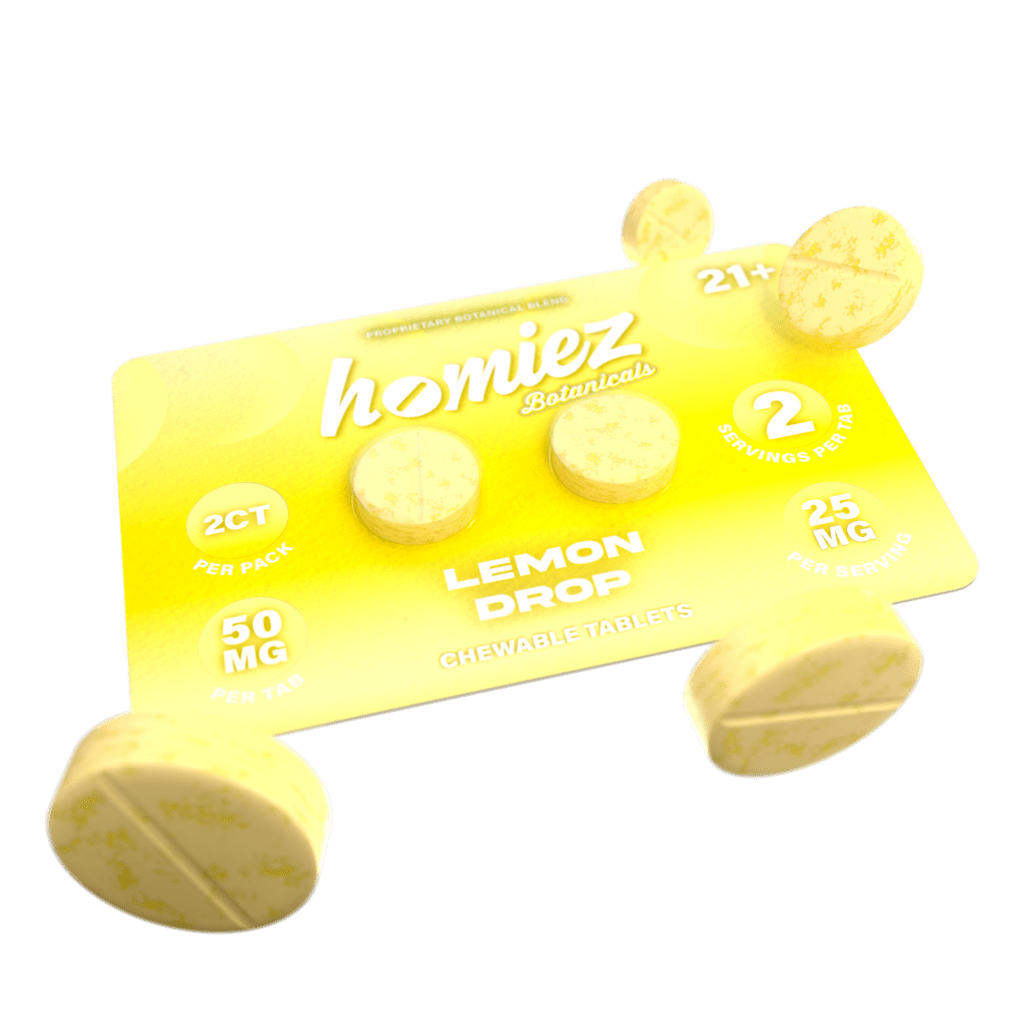
Homiez Botanicals brings Cat’s Claw-derived botanical formulations into a convenient tablet format designed for the modern consumer.
Rather than relying on complicated preparation methods or traditional botanical formats, Homiez Botanicals focuses on a straightforward experience with clear product information and accessible testing documentation.
Because innovation should not mean confusion.
It should mean creating something better suited to the way people actually live.
Why Cat’s Claw, and Why Now?
The botanical space has grown rapidly, but growth can create repetition.
The same plants.
The same conversations.
The same product formats.
The same expectations.
We think there is room for something different.
Cat’s Claw represents an opportunity to introduce more consumers to a botanical with a long history and complex plant chemistry while approaching it through a modern lens.
Researchers continue to study Uncaria tomentosa, its phytochemical composition, and the differences between its extracts and naturally occurring compounds. The scientific literature also makes clear that results can differ depending on the specific preparation and composition being studied, which is exactly why responsible botanical education and product transparency matter.
For Homiez Botanicals, exploring Cat’s Claw is part of a bigger idea:
The future of plant-powered products does not have to look exactly like the past.
There are still plants to explore.
There is still chemistry to understand.
There are still products to improve.
And there are still new lanes to create.
The Next Lane of Plant Power
We believe botanical consumers are curious.
They want to understand the products they use. They want to know where ingredients come from. They want more transparency, more consistency, and products that fit naturally into modern life.
That is the space Homiez Botanicals was built to explore.
Cat’s Claw may have a long history, but for many consumers, the introduction is just beginning.
We’re here to make that introduction.
Homiez Botanicals. A new lane of plant power.
Shop Cat’s Claw Powered Botanicals