The world of botanical products is growing, and there’s a lot to be curious about. Here’s why taking a closer look at ingredients matters more than ever.
If you’ve spent any time browsing botanical products lately, you’ve probably noticed how much the category has changed. There are new plants to discover, unfamiliar extracts appearing on shelves, and plenty of terminology that wasn’t part of the conversation just a few years ago. Even for those of us who spend our days working with botanicals, there’s always something new to learn.
And that’s part of what makes this space so interesting.
Plants have incredibly complex chemical profiles, and as interest in botanical products grows, so does the variety of ingredients, extraction methods, and formulations available to consumers. But with all that variety comes a little confusion, too.
Two botanical products can sit right next to each other, use similar language, and even look nearly identical while containing completely different ingredients. The word botanical tells us very little about which plants are involved or what else might be in a formulation.
That’s where we think a little curiosity goes a long way. Not because shopping for botanicals needs to become complicated, but because understanding what you’re buying should feel like a natural part of the experience.
A Botanical Product Isn’t Just a Botanical
One of the things we find most interesting about this evolving category is how many different plants are now part of the conversation.
You’ve probably seen names like Cat’s Claw, kava, and kanna appearing more frequently. Sometimes they’re discussed alongside each other, and sometimes they’re incorporated into products with similar packaging or formats. It’s easy to assume they belong to the same family of ingredients, but each has its own botanical identity and chemistry.
Cat’s Claw, or Uncaria tomentosa, is a climbing vine native to Central and South America, known for its naturally occurring alkaloids. Kava comes from an entirely different plant, Piper methysticum, traditionally associated with the South Pacific and known for compounds called kavalactones. Kanna, meanwhile, comes from Sceletium tortuosum, a succulent native to South Africa, containing its own distinct group of alkaloids.
Three botanical ingredients, three very different plants, and three distinct chemical profiles.
There’s nothing inherently wrong with exploring different botanicals or combining plant ingredients in a formulation. Innovation is a big part of what makes this category exciting. Where things get a little tricky is when those distinctions aren’t explained very clearly.
The marketplace has also faced concerns about products marketed as botanical or mushroom-based that contain substances not clearly identified on their labels, including compounds associated with research chemical markets. That’s a different conversation from traditional botanical extracts, but it illustrates why ingredient information is so important.
A botanical product’s appearance or branding doesn’t always tell the whole story. Sometimes you have to look a little closer to understand what you’re actually getting.
So, Where Does Cat’s Claw Fit In?
Cat’s Claw is the plant at the heart of Homiez Botanicals, and naturally, it’s a subject we enjoy talking about.
There’s something fascinating about a plant with such a long traditional history continuing to find its place in modern botanical research. Scientists have spent years studying the naturally occurring compounds found in Uncaria tomentosa, particularly its alkaloids, and there’s still a great deal to explore.
Of course, learning about a plant is different from understanding every product made with it. The way a botanical is extracted, the amount used in a formulation, and the presence of other ingredients can all influence the characteristics of the finished product.
For Homiez, Cat’s Claw is our starting point. It’s the botanical foundation behind our identity, and we want that connection to be easy to understand.
You don’t need to memorize plant names or become an expert in alkaloid chemistry to appreciate the differences. Sometimes just knowing which plant you’re looking at is enough to start asking more interesting questions.
Let’s Talk About What’s on the Label
We spend a lot of time thinking about packaging. The colors, the flavors, the design, and the way a botanical product catches your eye all matter. But there’s another part of packaging that doesn’t always get quite as much attention, and it’s arguably one of the most useful.
The back.
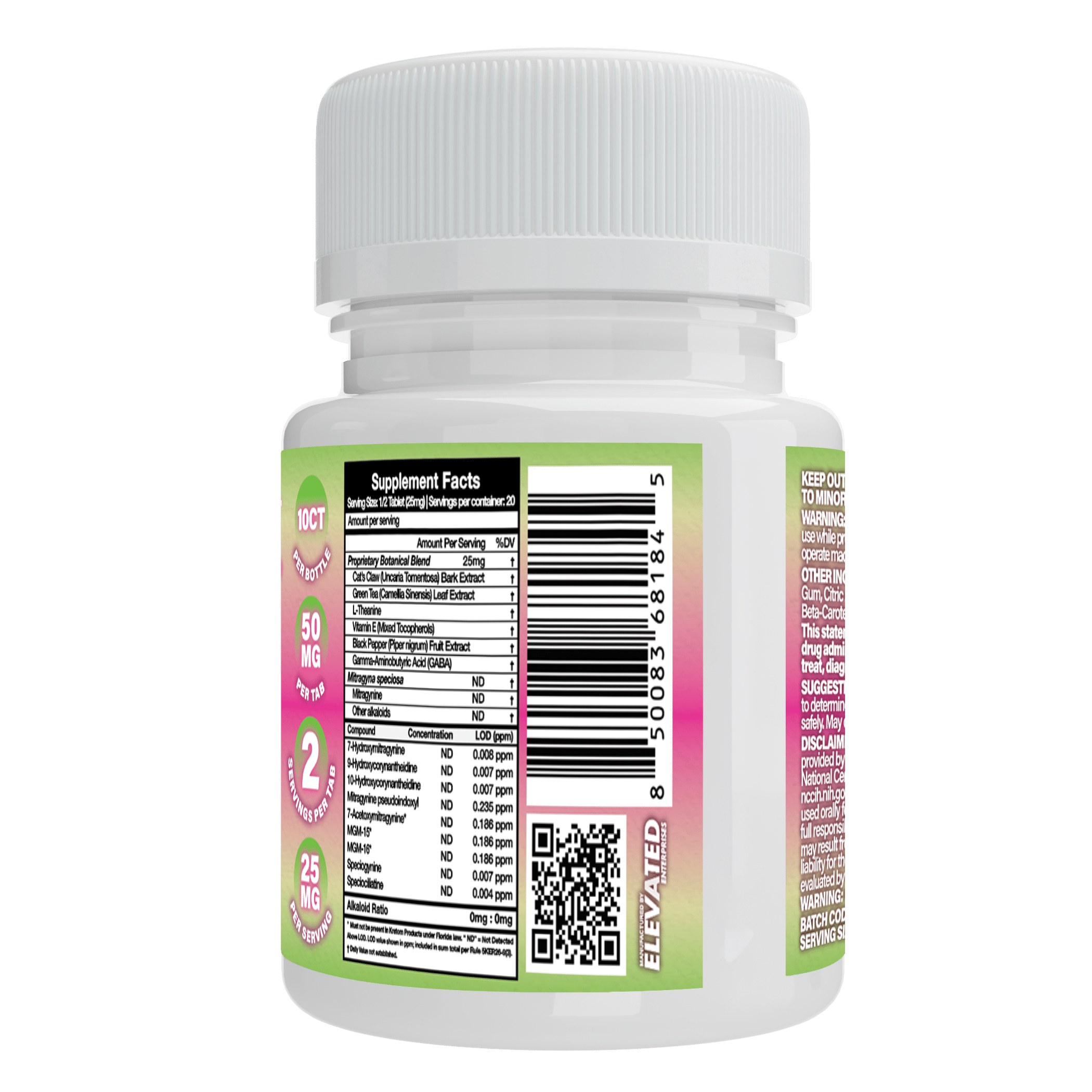
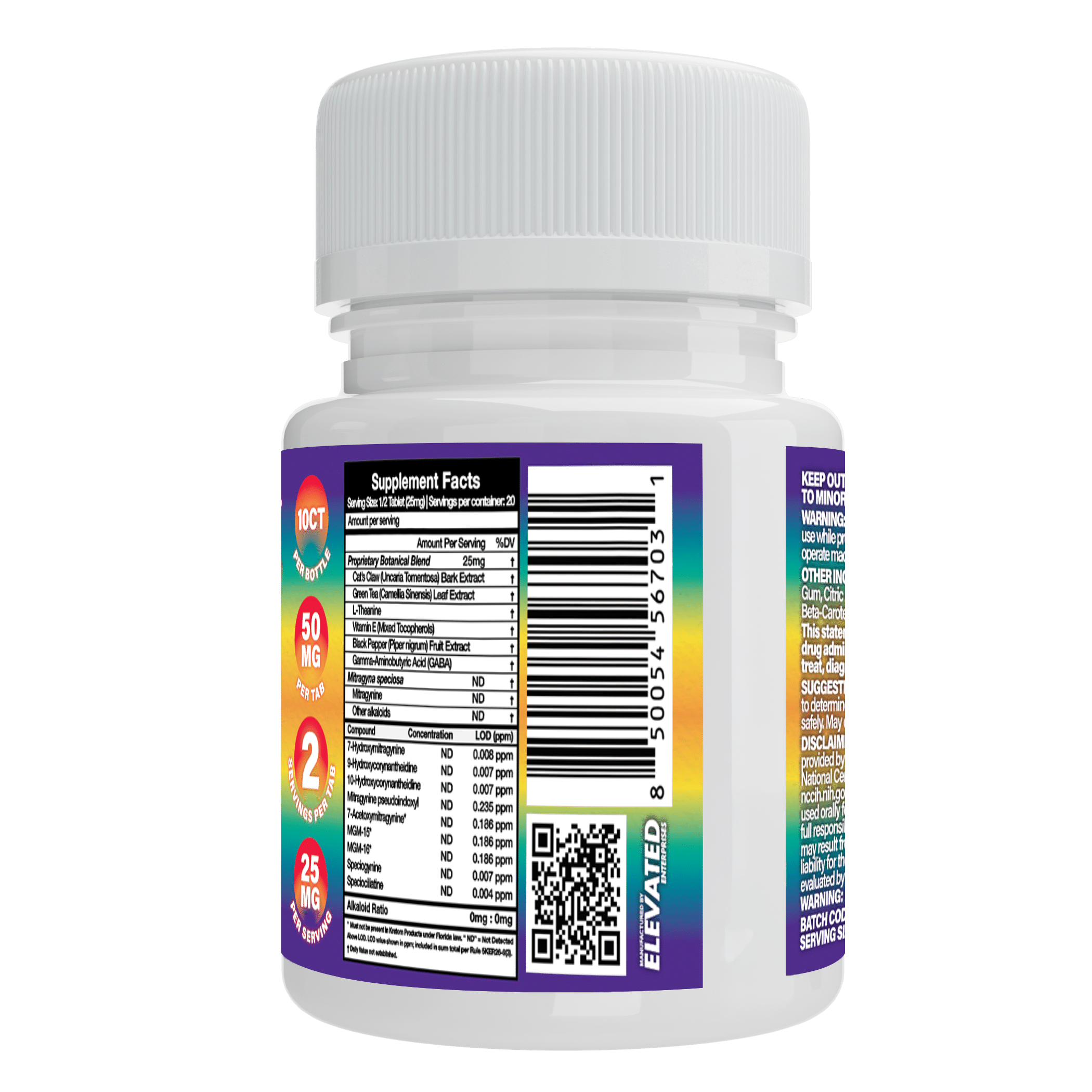
It’s not usually the most exciting part of a product, but it’s where a lot of the practical information lives. Ingredient lists, serving details, and other labeling information can tell you much more about a formulation than the biggest words on the front.
That’s why we’ve made a point of including ingredient and serving information on Homiez Botanicals packaging, with additional details available through our website.
If you’ve ever looked at a tablet ingredient list and wondered why there are so many unfamiliar names, you’re certainly not alone. Our Cat’s Claw formulations, for example, include Cat’s Claw extract alongside supporting ingredients such as microcrystalline cellulose, magnesium stearate, silicon dioxide, and dicalcium phosphate. These are commonly used in tablet manufacturing for purposes such as binding, improving powder flow, and helping maintain consistency during production.
We think explaining those ingredients is just as worthwhile as talking about the botanical itself. There’s no reason the supporting parts of a formulation need to feel mysterious.
The same goes for milligram numbers. A 50 mg tablet containing one botanical extract isn’t necessarily comparable to a 50 mg tablet containing another. Even extracts from the same plant can differ depending on their concentration or how they’ve been processed. That’s why it’s helpful to look at serving information and understand what the number on a package actually represents.
Ultimately, we believe there’s a balance between protecting a unique proprietary formulation and giving customers enough information to understand what they’re purchasing. The specifics of how something is made may be proprietary, but its basic ingredient identity shouldn’t have to be a mystery.
What Does Lab Tested Really Tell Us?
Laboratory testing is another topic that comes up frequently in botanical conversations, and for good reason. As more ingredients and compounds enter the marketplace, having reliable information about a finished product becomes increasingly valuable.
But testing is also one of those subjects that can sound more straightforward than it really is.
When a product is described as lab tested, it’s reasonable to wonder exactly what that means. Was the laboratory looking for specific alkaloids? Was it measuring the concentration of a particular compound? Was the sample evaluated for certain contaminants?
A Certificate of Analysis, or COA, documents laboratory findings for a particular sample. It can provide useful insight into the product being evaluated, but it doesn’t necessarily tell us everything about that product. Testing for a defined group of kratom alkaloids, for example, isn’t the same as conducting a comprehensive analysis of every compound that might be present.
At Homiez Botanicals, we’ve spent a considerable amount of time navigating these conversations ourselves. Understanding which testing methods are appropriate, what the results actually establish, and how to communicate that information clearly has been an important part of our experience in this category.
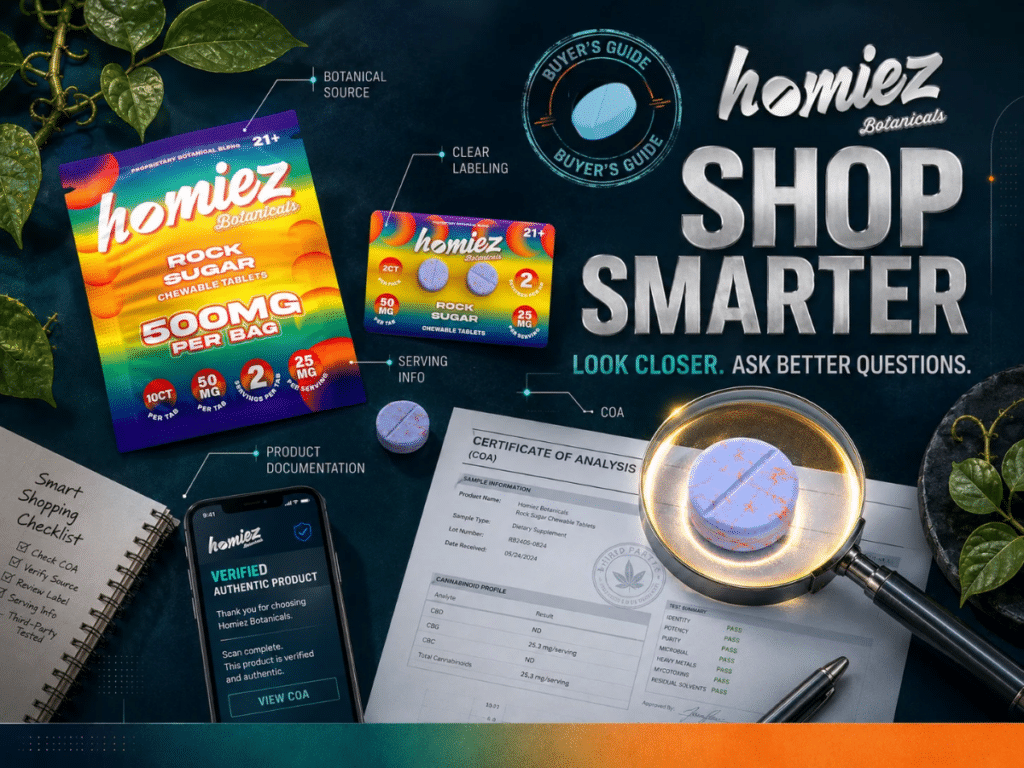
We maintain supporting testing documentation and make product information available because we think those details deserve a place in the conversation. And while not everyone is going to sit down and read a laboratory report over their morning coffee, it’s nice to know that information is available when you want to take a closer look.
There’s Still So Much to Discover
One of our favorite things about the botanical world is how much there still is to learn. Plants that have been familiar to different cultures for generations are becoming part of new conversations, and modern research continues to uncover details about their chemistry and composition.
At the same time, the products reaching shelves are becoming more varied and, sometimes, more complicated. That’s why we keep coming back to something relatively simple: knowing what you’re buying matters.
The next time you pick up an unfamiliar botanical product, take a moment to turn it around. Read the ingredient list, look at the serving information, or visit the brand’s website to learn a little more about what’s inside. You might discover something interesting about a plant you’ve never heard of, or learn that two products you assumed were similar are actually quite different.
For us, Cat’s Claw is where that curiosity begins. We hope that by sharing more about our ingredients, packaging, and product documentation, we can make it a little easier for others to explore the category with the same curiosity.
Because the more we understand about what’s on the shelf, the more interesting the conversation about botanical products becomes.
Curious about what goes into Homiez Botanicals? Explore our ingredients, botanical product information, and botanical story at myhomiez.com.
Shop Homiez Botanicals