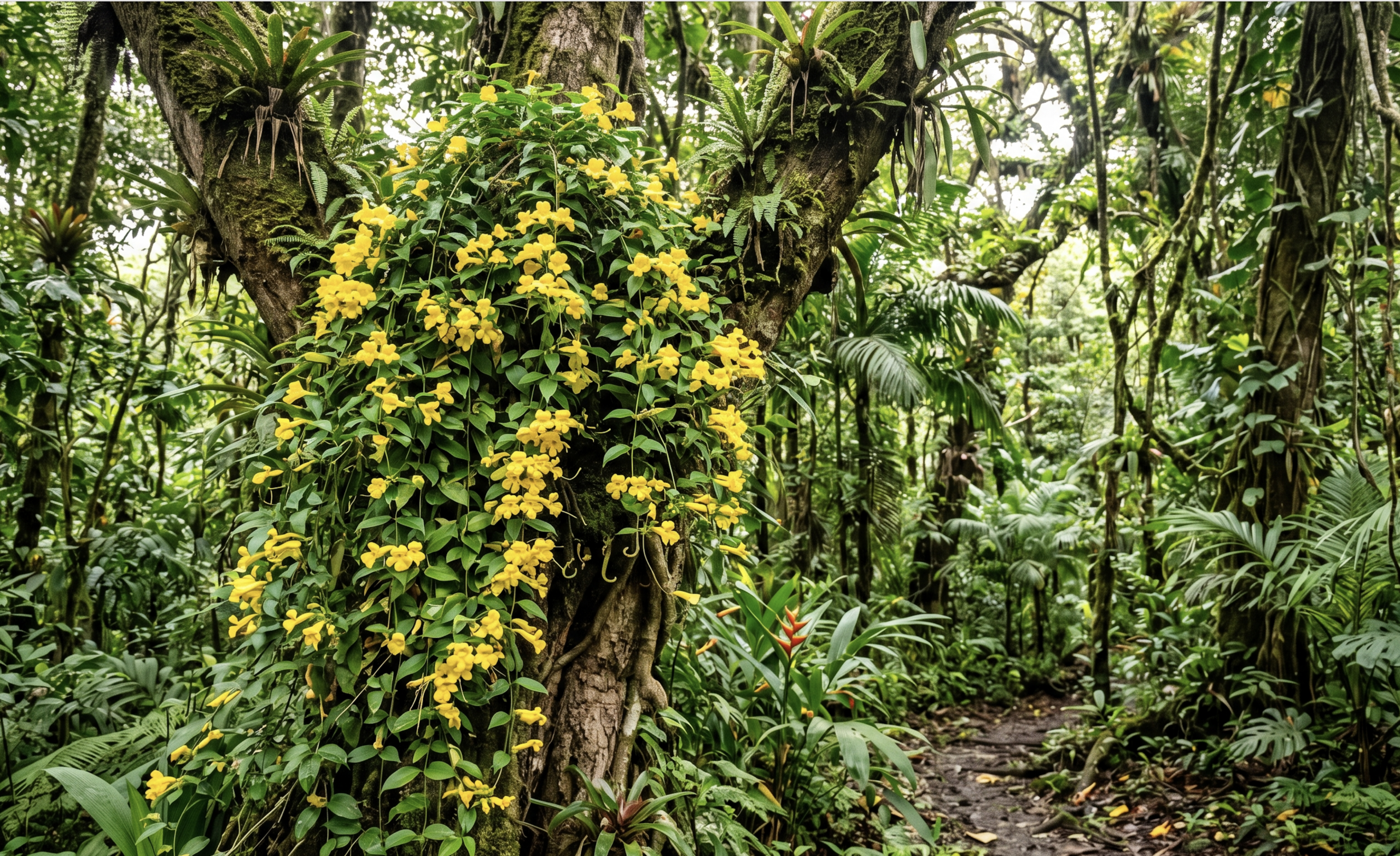
Before Cat’s Claw ever showed up in a smoke shop, on a product page, or in our very specific botanical rabbit hole, it was already growing wild through tropical forests in Central and South America. Scientifically, it is called Uncaria tomentosa, but “Cat’s Claw” is definitely the more common name. The vine grows these curved, hook-like thorns that help it grab onto surrounding plants as it climbs. They look a little like claws, hence the name.
Cat’s Claw has a much longer history in South America, especially in Peru, where it has been used within traditional practices for generations. Long before anyone was talking about modern extracts, formulations, alkaloids, or testing, people already knew this plant. This is not some brand-new botanical that suddenly appeared because the industry needed something new to talk about. The plant has been around and utulized in wellness practices for decades. The new part is how it’s being discussed and extracted now.
And that is where things get fascinating.
Okay, So Why Are People Talking About Cat’s Claw Now?
Part of the reason is pretty simple: people keep looking for new botanicals. Once you start paying attention to this space, you realize very quickly that there are way more plants out there than the handful everyone already knows by name. Cat’s Claw happens to have a particularly interesting story because it sits right at the intersection of traditional plant knowledge and modern scientific curiosity.
Researchers have spent years looking at what is actually inside the plant. Different parts of Cat’s Claw have been studied, including its bark, roots, leaves, stems, and wood, and scientists have identified a wide mix of naturally occurring compounds. That includes alkaloids, which is probably the word most people in the modern botanical space recognize first.
You may have seen names like mitraphylline, isomitraphylline, and isorhynchophylline associated with Cat’s Claw.
(No, you absolutely do not need to memorize those.)
The bigger point is that Cat’s Claw is not chemically simple. Like most plants, it is made up of a whole mix of compounds, and depending on what part of the plant researchers are looking at or how it has been prepared, that chemical profile can look different. That is one of those details that sounds super nerdy at first, but it actually matters a lot once you start looking at modern botanical products.
“This product contains Cat’s Claw” is only the beginning of the conversation.
The Plant and the Product Are Not the Same Thing
This is probably one of the easiest things to overlook when talking about botanicals. We use the name of the plant and the name of the product almost interchangeably, but there is actually a pretty long journey between a vine growing in the rainforest and something sitting on a retail shelf.
Someone has to decide what part of the plant is being used, how that material will be processed, what kind of ingredient or extract will be created from it, and how that ingredient will eventually fit into a finished formula. From there, you still have questions about serving size, product format, labeling, and testing. All of those choices help determine what the finished product actually is.
That does not mean shopping for botanicals needs to become complicated. If anything, we think the opposite should be true. The more unfamiliar the plant is, the more important it is for the finished product to be easy to understand.
If you are seeing “Cat’s Claw” on a package for the first time, it is completely reasonable to wonder where the plant comes from, what makes it interesting, what compounds researchers have found in it, or how something that starts as a giant woody vine becomes part of a modern botanical product. Those are much more useful questions than simply being told that something is new and exciting and being expected to leave it at that.
The Rabbit Hole Gets Deep Fast
This is probably the part of botanical research that we enjoy the most, because you almost never end up where you expected to start.
You can begin with something as simple as wondering why this vine is called Cat’s Claw, and a little while later you are reading about the differences between plant parts, oxindole alkaloids, extraction methods, and how researchers compare one sample with another. Every answer seems to open another door, which is how a plant you barely knew existed can suddenly become the thing you are telling everyone about for the next two weeks.
Cat’s Claw is especially good at sending you down that kind of rabbit hole because the story keeps expanding. There is the plant itself, its traditional history, the chemistry researchers have identified, the differences between different preparations, and then the completely separate question of how all of that translates into a modern product someone can actually buy.
The more you learn, the harder it becomes to think of botanicals as simple ingredients with one defining characteristic. Plants are messy and complex in the best way, and that complexity is part of what makes them interesting.
It is also why we think the information surrounding a botanical product should be just as thoughtful as the product itself. If there is a genuinely interesting story behind the plant, there is no reason to flatten it into a few marketing buzzwords.
Cat’s Claw Already Had a Story Before We Got Here
One thing we want to be very clear about is that Homiez Botanicals did not “discover” Cat’s Claw, and we do not want to talk about the plant as though its story began when it landed on one of our packages.
Cat’s Claw has a long history in South America, including within traditional practices that existed generations before modern botanical brands were part of the conversation. Researchers eventually added another layer by studying the plant’s chemistry, and now modern manufacturers and consumers are entering the picture too.
We see ourselves as part of that newest chapter rather than the beginning of the story.
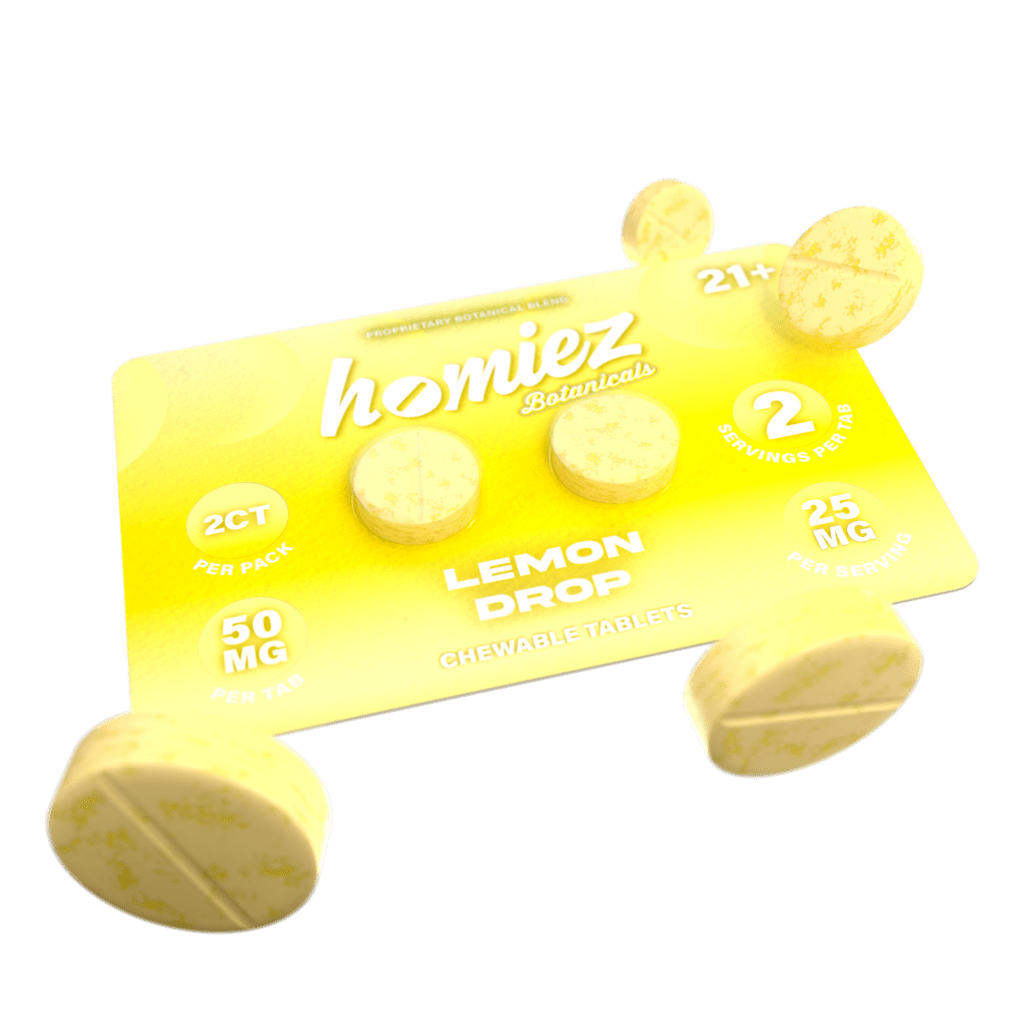
For a lot of our customers, Homiez Botanicals may genuinely be the first time they hear the words “Cat’s Claw,” which gives us a pretty obvious responsibility: make that introduction make sense. We want the product to feel approachable, the information around it to be clear, and the testing easy to find. If someone gets curious enough to keep digging after that, even better.
That is really the balance we are after. You should be able to walk into a smoke shop, see something unfamiliar on the shelf, and understand enough about it to know what you are looking at without needing to spend an hour reading scientific papers first. The deeper information should be there if you want it, but understanding the basics should never feel like homework.
Why Cat’s Claw Fits the Homiez Botanicals World
The whole reason Homiez Botanicals exists is because we think the botanical category is much bigger and more interesting than the handful of plants that most people already recognize.
There are so many botanicals with long histories, unusual chemistry, and genuinely interesting stories that have never really entered the mainstream conversation. Cat’s Claw is one of those plants that feels obvious once you learn about it, but completely unexpected the first time you hear the name.
That makes it a really natural fit for what we are trying to build.
We get to take a plant that has been around for a very long time and introduce it to people who may have never crossed paths with it before, while also making the experience a little easier to navigate than digging through research papers on your own. We can explain where it comes from, why researchers are interested in it, what makes its chemistry worth talking about, and how that all connects to the modern product sitting in front of you.
Of course, if you are anything like us, there is always the possibility that you will start with one article and end up fifteen tabs deep anyway.
An Old Plant, A New Audience
The easiest way to describe what is happening with Cat’s Claw right now is probably this: the plant is old, but a lot of the people discovering it are new.
It was climbing through tropical forests long before modern botanical products existed, and people in South America were familiar with it long before researchers began mapping out its chemistry. Science added another layer to the story, and now modern consumers are finding the plant through retail shelves, product pages, online searches, social media, and the occasional late-night research spiral.
What is changing is not the plant itself. It is the number of people paying attention to it and the ways they are able to learn about it.
That is the part we find exciting. Cat’s Claw already has plenty of history behind it, but there is still a lot of room for new conversations around the plant, its chemistry, and how it fits into the modern botanical space.
We are happy to be part of that conversation, and if this happens to send a few more people down the same Cat’s Claw rabbit hole we fell into, we consider that a win.
Homiez Botanicals. A new lane of plant power.
Shop Cat’s Claw Powered Botanicals